
The Bobbin:
Our Spun Yarn Blog

Sarah Beaudette Sarah Beaudette

Reader Spotlight: Janet the Grammar Wizard and Chef Extraordinaire

This week in our Reader Spotlight series, we talk with Janet the grammar wizard, chef, food writer, and cook book author. As one of our most veteran beta readers, Janet is a close reader and is full of tough love!

croissant-690646_1920.jpg


In the Reader Spotlight series we ask our smart, diverse and multi-talented readers what makes them tick, and what they're seeing in Spun Yarn manuscripts. Our readers span the gamut of literary taste, so expect to see a little bit of everything! 

Along with Angela, Janet is one of our two most veteran readers. She's in the enviable position of exercising her passions in her 'day job' as a cookbook author, food writer, copy editor, recipe developer, and cooking instructor. Janet loves language -- not only reading and writing but editing as well (she's a grammar freak). Her passion for reading and her fifteen years in corporate communications make her an excellent, close reader for The Spun Yarn. 

- - - 

The Spun Yarn: What sparked your love affair with reading? 

Janet: My parents always read a lot, so my siblings and I came by it naturally. I've read all my life and can't imagine not reading every day. If I'm in a waiting room and have forgotten a book, I'd rather read a crappy magazine than nothing at all. I enjoy general fiction, some non-fiction (cookbooks and other food writing, language/grammar books, and politics), mysteries and thrillers, and some science fiction.

The Spun Yarn: Here's a hard one: choose ONE favorite book and tell us why you like it.

Janet: That's a tough question, but I have to say The Great Gatsby by F. Scott Fitzgerald. The prose is beautiful, and Fitzgerald masters the difficult technique of employing a narrator who is involved in the story but not the main character. It also has one of the best ending lines in all of literature: "So we beat on, boats against the current, borne back ceaselessly into the past."

The Spun Yarn: Agreed, that's a classic line. What do you find yourself commenting on most often when reading a Spun Yarn manuscript?

Janet: Grammar, punctuation, usage and syntax. Granted, I'm obsessed with grammar, but it continually surprises me that writers don't take more care to proofread and edit.

The Spun Yarn: We give feedback on manuscripts in all stages of the writing process, but you're right that it's good for authors to remember to polish as they go along, as those edits can be hard to tackle all at once in the final revision. So what's been favorite moment while reading a Spun Yarn manuscript?

Janet: One manuscript (I think it was my third) really spoke to me. The main character was a graduate student in classics, and since I was (many years ago) a grad student in philosophy, it was easy for me to relate to her. The plot was also compelling. I really hope to see this book in print!

unnamed.png
Read More
Novel Editing Sarah Beaudette Novel Editing Sarah Beaudette

How To Decode Beta Reader Comments on Pacing

How do you translate your beta readers’ pacing comments into an action plan to revise your novel? In this series we share our learnings from more than a hundred beta readers’ full manuscript comments. In this post we Pacing.

beta-reader-pacing.png


At The Spun Yarn, we do Feedback better than anyone else. You choose your reader demographics. We assign three readers to provide full novel feedback, including check-ins throughout the novel, overall comments, and qualitative scores compared to our growing manuscript database. Then we find consensus, analyze, and give you actionable suggestions for what to do in your next revision.

In our How to Decode series, we share our learnings from more than one hundred full beta reads from our diverse group of readers. How do beta reader comments map to potential problems in your manuscript, and what can you do to address them? 

Ok, so you finished a draft of your WIP (go you). You swallowed your imposter syndrome long enough to ask some people to read it, (phew!), and at least one of them finished it (you're rocking everyone's pants off). 

So...now what? Your reader(s) said some good things about your WIP, and maybe some not-so-amazing things too. You have a feeling that some of their comments are right, but you aren't sure if you agree with others. What do you tackle in your next revision?

More readers = consensus = gold 

Quick note: the more readers the better. The good thing about multiple readers is consensus: where they agree and disagree. Consensus is liquid gold for writers.

Personally, when it comes to big story issues, I trust an honest reader's gut reaction that something is wrong, and then decide whether it's important to fix it, or whether fixing it would break something else. When two or more readers independently agree that something is wrong, I bow to the throne of consensus and I FIX IT.

If you don't have multiple readers (get some, and uh, we do consensus analysis really well), you can still map specific comments to areas you may want to look at in a revision. 

time-beta-readers.jpg

Comments That Are Really About Pacing 

Pacing, the speed at which your story unfolds, gathers momentum, complicates itself, and resolves. Different genres have different paces, literary fiction moving more slowly than thrillers, for instance. What's important is that your pacing should be deliberate and consistent. 

A glacial pace could lose readers and sound your WIP's death knell, even in literary fiction. A frenetic pace will confuse readers and may eventually lose them, even in a thriller. You may keep readers a bit longer with a frenetic pace than with a glacial pace, but a confusing, hurried pace is worse because when you do finally lose your readers, they will be frustrated and ANGRY with you. Hell hath no fury like a disappointed reader, especially when it comes to Amazon reviews. 

Let's take a look at the kinds of quotes we see in Spun Yarn beta comments that relate to pacing. 

"At three-quarters of the way through, I was riveted." 

We've noticed that our most liked manuscripts share this trait: readers are at their peak of enjoyment three quarters of the way through.

This makes sense when you think about it: in the first quarter, you're setting out your premises, building your world, and introducing your conflict and characters. In the second quarter, your characters are journeying, complicating the conflict, reaching their lows or gaining tantalizing leads to their highs, and by the third quarter, all of your work should be paying off as the plot and character development fall into place and gain momentum.

By the three quarter point, you may have answered or resolved some initial conflicts, but readers are tuned in and leaning forward to see your grand finale. This is pacing at its finest: a beginning and middle that meticulously set all the pins in place, a third quarter and finale that knock them all down in surprising ways. It's a sign of a great outline, or, if you're a panster, that your revision thus far have paid off, pulling all of your disparate threads into place. 

"The book was a little slow for me at this part..." 

Slow = boring. Readers are generally nice people. They don't want to hurt your feelings. Any good writer can hurt their own feelings by translating words like "slow" into "boring the pants off of me, turning my eyelids to cement, making me crave a root canal to distract from the monotony." Okay, we writers tend to go overboard with the self-deprecation.

If readers say that a particular section was slow or took them several tries to read, they're indicating potentially slow pacing. You haven't made them care enough about what they're reading, or, in some cases, you're covering too much old ground and frustrating readers who want to move to new plot events.

A well-paced book will unfold at a consistent pace, and will always give readers a compelling reason to keep going. Most often, the reason to keep going is conflict. Sometimes it's mystery. Your characters should always be struggling and changing. If readers get bored, consider ways to shorten the section in question, cut it altogether, or weave it into a section of the book that does have clear conflict.

Finally, clunky writing can slow the pacing. If you sent a book out to beta readers but none of them finished despite their pinky swears, take a hard look at your opening chapters. In addition to conflict, is your writing tight and engaging? Check yourself on passive language. I like this article on passive voice because it dispels the notion that passive voice is always bad, and gives examples of when and when not to use it. Check for overuse of adverbs (we don't believe that adverbs are evil but they can certainly be overused). Check for tedious reiterations of things you've already said in slightly different ways. Check for filter words and awkward phrasings. Read the opening aloud in front of a frenemy and you should be able to tell immediately if there's something wrong with the writing. 

"The X part felt a little too quick, and/or confused me."

When readers are confused or feel that events unfold too quickly, it could be a sign of inconsistent pacing. At the Spun Yarn, we often see this in the last quarter of the book. An author finds herself with too many loose ends to tie up, or isn't sure about how to end the story and it shows in an overly convenient ending or an ending that leaves too many questions unanswered. 

  1. Make sure your subplots are resolved. Map them out and address each one, even if only in passing. The point is to instill the reader with confidence that you're not wildly abandoning subplots along the path behind you: that you have a plan, that you haven't forgotten anything.  
  2. If every subplot's resolution occurs in the last quarter of the book, see if you can resolve a few of them earlier to make the pacing consistent. Minor subplots can be resolved a bit earlier, and spacing them out can quell the heartburn that comes from a placid third quarter followed by an explosive, chaotic finale. 
  3. Cut some subplots altogether if they're not strongly contributing to the story enough. 

If you receive this feedback about 'too much at once' or 'it's confusing' at the beginning of your story, tease out whether readers are content to stick with you and trust that their questions will eventually be answered, or whether readers seem overwhelmed and panicked. If the latter, try taking more time to cover the critical elements first, and saving other characters / mysteries / subplots / settings for later. 

We notice in Spun Yarn comments that readers are often willing to give you the benefit of the doubt for the first quarter of the book, as long as they don't continue feel overwhelmed in the second quarter of the book. 

Let us know in the comments: was this helpful? Were you rolling your eyes at the lack of new information, or panicked at seeing terms you didn't recognize? If the latter, check out this brief primer on pacing from the always helpful Writer's Digest. 


Read More
Novel Editing Sarah Beaudette Novel Editing Sarah Beaudette

You wrote a book. Is it any good?

Take our free quiz to see if the book you wrote is any good. We cover plot, characters, themes, reader feedback and more! The Spun Yarn helps authors sort through the daunting process of evaluating your manuscript. 
After months (or years) of carpal tunnel, crippling self-doubt, and procrastination, you have FINALLY FINISHED YOUR MANUSCRIPT. Congratulations!!! You emailed your mom and told your dentist and other random people on the street. Hopefully, you also sent your manuscript to a few readers, and at least one of them actually finished the thing and gave you some feedback.

So...what's next? Are you sitting on a bestseller? Are you ready to approach agents? How can you tell? At the Spun Yarn, we've learned a lot about what separates the finished from the not-quite-there-yet, and we'd love to share those learnings in our free quiz.

Read More
Jack Bunker Jack Bunker

Is My Book Any Good? A Critique Could Tell You

Is your book any good? Author Jack Bunker discusses the journey of getting feedback on two of his books, and how The Spun Yarn critique service gave him the direction he needed for a revision.

This is the first in a series of guest posts from authors talking about their experiences with writing, revising, and getting feedback on their manuscripts. 

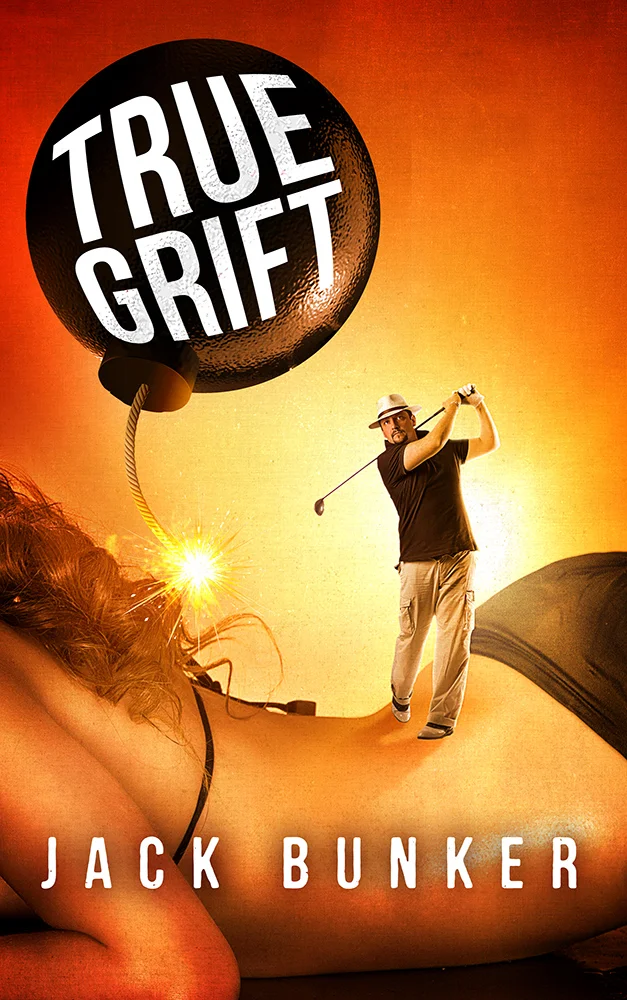
Jack Bunker is a trial lawyer who splits his time between the home he shares in Northern Virginia with his wife and four children, and their family farm in Virginia's breathtaking Bluegrass Valley. His debut novel, TRUE GRIFT, was a critical success published by Brash Books.

- - - 

Finish a manuscript and you’ve earned that magical sensation. Millions (billions?) have said they’ll write a book, but you’ve done it. Your options now are to enjoy the afterglow, or to do what so many of us have done – fling that manuscript to the far corners of agentdom before competent eyes and cooler heads suggest maybe, just maybe, it could use a tweak.

Enjoy the afterglow.

Friends and family are only human. They don’t want to bruise your pride. They want to be supportive. They’re also busy. While you’re cataloging every sacrifice you made to complete your manuscript, they’re working and taking their kids to soccer or picking up in-laws at the airport. Yeah, it only takes you three hours and forty-nine minutes to read it, but you have your schedule, they have their own, and your impatience is not their problem.

Under a different title, I sent my novel, TRUE GRIFT, out to more agents than I’d like to confess. Most didn’t even bother to respond. Cricket Woodstock. Ultimately, when the publishers at the then-newly formed Brash Books got the manuscript they loved it. They wanted it. 

Jack's book, published by Brash Books to rave reviews in Publishers Weekly.

Jack's book, published by Brash Books to rave reviews in Publishers Weekly.

They had a few notes.

They were great about the process. The suggested edits were mine to accept or reject. The publishers, Joel Goldman and Lee Goldberg, are writers themselves and their perspective from the writer’s end gave them an unusual empathy. Some of the notes I accepted without hesitation; others I politely declined. In the end, however, a book that more than 70 agents passed on received not one, but two separate starred reviews in Publishers Weekly.

Before I wrote TRUE GRIFT, I wrote another book, JUDGMENT PROOF, that agents had ignored as well. A couple of early readers had given me a few thoughts, some more useful than others. When I came across The Spun Yarn, I had nothing to lose, so I submitted it for review. Why not see if three unbiased readers thought my book was good? I couldn’t have been more thrilled with the feedback I received.

Some nagging doubts I had were confirmed, others were allayed completely. The readers’ ratings I took for what they were. Every book is not for every reader. (The movie Jaws somehow gets only a 97% score on Rotten Tomatoes.) But when three independent adults with no stake in your personal happiness give you feedback it’s worth consideration.

Not every reader will see things the way you do. While you don’t have to accept a reader’s conclusions, if you have to point out the person’s errors, you’ve just told yourself something. One person, okay, he skimmed over that plot point. Three people saying the character’s not believable? That’s a problem. It's also an opportunity to make the next draft of the manuscript better.

A reader’s feedback on your novel may reinforce a suspicion you already held. A different opinion may point out incongruities or character traits you didn’t realize were seeping onto the page. When it comes to notes, I have to believe all writers would agree, in the end, only one thing matters:

Does it make the book better?

While workshops have their own utility, just as with friends and family, personalities may bear on what should really be a pure process. Intelligent, thoughtful, and motivated readers are the ideal audience. I’ve gone over my own Spun Yard feedback for JUDGMENT PROOF at least a dozen times. I found particularly useful the quarterly report card [Flash Feedback] – a snapshot of how a reader feels about the book at the one-quarter mark, the halfway mark, etc. This is great for isolating just where a story may start to sag, or where an injection of some kind (clarity, action, exposition) might help.

An example of Flash Feedback in a Spun Yarn Manuscript Report

An example of Flash Feedback in a Spun Yarn Manuscript Report

I’ve worked my Spun Yarn feedback into edits. I’ll continue polishing the manuscript and float it back over the transoms of agentdom. Thoughtful suggestions clearly made my first book better. I think they’ll do the same for my next book.

Read More
sean hewens sean hewens

Writing a Novel? Harness the Power of Design Thinking

About a year ago, I finished a novel. After much editing in the early morning hours, I arrived at that place where I could no longer see any flaws in the book. What I needed next was feedback (on what I hoped was a masterpiece, but couldn’t be quite sure).

But that’s the thing. Finding readers who have the time to slog through an unpublished manuscript is hard. Like, really hard. Many people said they would read it, but never got further than the first few chapters. Was it because they hated the book? Or just because they got busy watching season four of Orange is the New Black? And the wonderful friends who did read it—were they actually honest with me? Or pulling punches because, who wants to make a friend cry?

That’s when a friend (Jay, Spun Yarn Co-Founder) who actually finished my book had an idea: What if we could take some of the best aspects of the design thinking process (such as collaboration, multidisciplinary perspectives, prototyping) and adapt them for the writing and publishing space by connecting authors with a diverse pool of readers who could provide thoughtful, honest feedback? Meet The Spun Yarn.

We hypothesized that there was a whole universe of potential readers out there—moms and dads and students and grandparents who might be interested in earning a bit of extra cash by providing thoughtful feedback on an unpublished novel. So we placed a Craigslist ad in four cities to see what would happen. Within 24 hours, we had to pull the posting because we were flooded with wonderful applicants. A traveling musician from Wisconsin. A cookbook author from Georgia. A retiree and jewelry maker from San Jose. We hired these folks and others and created the framework and the process to provide honest and actionable feedback on people’s novels—including mine.

Here's how it works:

Every novel that we receive is matched with three readers, each of whom reads the entire book and provides feedback using the same evaluation matrix (a mix of qualitative and quantitative input).

Once this stage is complete, our Spun Yarn team crunches the reader input and identifies the themes and patterns that have emerged about the manuscript. We deliver this synthesized feedback report to the writer. In a sense, what we’re doing is helping writers understand that a draft of their book is just like a design prototype. Most of the time, what we’re finding is pretty straightforward stuff. A main character needs to be fleshed out. An author’s ending ties things up way too neatly. Readers absolutely loved the glimpse into the world of surgery that a certain novel provides. Double down on that in a future prototype (I mean, draft) of the novel.

There’s a saying attributed to IDEO founder David Kelley that there’s no such thing as one magic idea. What I’ve learned from the Spun Yarn is that the same goes for novel writing. It turns out (based upon input from three very thoughtful and very honest Spun Yarn readers), that I haven’t written a masterpiece. There is a ton of work that still needs to be done. But thanks to help from my own multi-disciplinary design team (based in Minnesota, Rhode Island, and Berkeley, respectively), the next draft of my novel will be just a little bit closer.

--Sean Hewens, Co-Founder of the Spun Yarn

This blog post was originally published by Sean Hewens on IDEO's The Octopus Blog, which provides a designer's view on the universe.

Read More